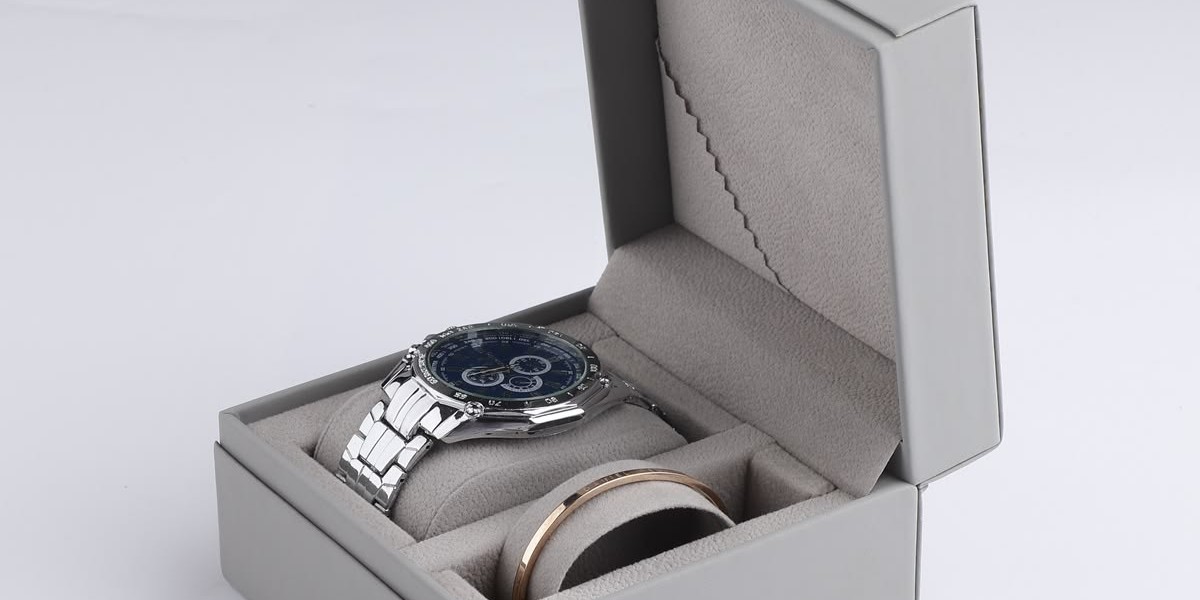

The Custom Watch Boxes are the key to the way in which high-quality timepieces can withstand underhandling, storage, and delivery over long distances without losing their accuracy or shine. A watch is a miniature work of engineering crystals and bezels, crowns and movements are all subject to shock, pressure, and abrasion.
Special box constructions hold the watch head, bracelet or straps and protect against micro-impacts that lead to expensive returns. In addition to the safety, protective formats amplify perceived quality to unbox and connote craftsmanship consistent with the watch within the watch. In this article, the author dissects the interaction of engineered forms, inserts, closures and finishes to provide reliable protection at every point of contact.
Load-Bearing Frames
A watch box should not be compressible when stacking, warehousing and courier handling. Wholesale buyers of custom watch boxes wholesale are usually interested in rigid board thickness, reinforced corners, and shells that are layered, which redistribute vertical loads. The multi-wall construction helps in preventing the collapse of the lids, and the double wrapping of the edges helps to minimize the denting on the corners. The base has structural ribs that ensure geometry over time to ensure the lids and closures remain uninterrupted and smooth. Looking at the frame on which the load paths are engineered, the box maintains shape through repeated transport cycles and openings, retaining protection and presentation of high-value timepieces.
Regional Fit Standards
Security is enhanced where the dimensions of the boxes correspond to the local logistics and shelving standards. In the case of brands that are shipped within Europe, custom watch boxes, UK shelf depths and courier size bands are used to match the format of the secondary cartons and reduce the voids within them. Fits increase the possibility of reducing the movement in a lateral direction, which also minimizes the possibility of micro-shocks to the movement in transit. Dimensional harmony also simplifies palletization and retail inventory, eliminating handling processes that add impact risk. Structural protection does not only involve strength, but it also has to be the correct size of the container for the trip the watch will be undertaking.
Insert Engineering
The heart of protection consists of the insert. Cases of custom-printed watch boxes usually combine branding with custom-engineered cushions to support the case at the center of gravity. Memory-foam pillows squeeze on straps, and moulded trays hold metal bracelets without scratching. Crown and pusher cutouts avoid any pressure points, which might cause misalignment of components. Inserts are used to eliminate vibration and ensure that the watch face does not touch hard walls, and keep the finish quality unchanged between the factory and final user by managing contact surfaces and pressure distribution.
Shell Integrity Systems
External casings prevent puncturing, scuffing, and torsion. When using custom watch boxes packaging, designers use rigid cores along with laminated wraps to avoid tearing and abrasion of the surface. Corner locks internally increase torsional hardness, which does not allow the boxes to twist once they are grabbed at one corner. Hinge spines and lips of the lid are kept straight, so closures lock; they do not get lost as time goes by. This is a system-level integrity that excludes defects that can facilitate dust entry or accidental opening: small malfunctions that can tarnish the protective integrity of high-quality packaging.
Low-Volume Prototyping
Not all launches are scale starting. There is no minimum program on custom watch boxes that allows brands to test protective structure prototypes before making large-scale runs. This is a good stage to employ drop testing, vibration testing, and fit testing on various watch cases of different sizes. Iterative sampling assists in refining foam densities, cavity tolerances and closure tension. Premature testing minimizes downstream returns and warranty claims by ensuring that structural protection is shown to work under actual logistics conditions when there is volume production before specifications become fixed.
Closure Reliability
Closures are not ornamental features. Custom boxes with logo often include magnetic catches, metal clamps or friction-fit lids, which need to have the same holding strength. Excessively loose, and the lids will open during shipping; excessively tight, and repeated use will destroy hinges. Engineers define gradient grades of magnets, clasp tolerances and depth of lid overhangs to trade off between security and comfort of the user. Qualified closures ensure the maintenance of the microclimate inside the watch and eliminate the occurrence of abrupt shocks to the watch when being handled.
Form-Factor Adaptation
Security should be able to suit varied watch profiles. Modular cavities and adjustable pillows serve to fit the bulky sports watches, slim dress watches, and multi-watch sets in customized watch boxes. Tiered trays are used to separate several units in order to prevent metal-to-metal contact. In the case of travelling, the reinforced spines and wraparound shells take care of torsion in the luggage. The use of internal geometry that is specific to the product line has ensured that the brands retain the same level of protection across collections without having to overbuild universal one-size-fits-all boxes at the expense of space or stability.
Ownership Experience
Warranties are provided post-purchase. Durable linings to resist the abrasion of repeated insertions and removals. The personalized watch boxes made to be owned in the long run have such durable linings. Anti-slip bases will prevent desk-top fall, and hinge dampers will regulate the opening speed to prevent sudden dropping of the lids. Considerate interior designs direct safe storage as the customers turn the watches. The box serves as a haven beyond shipping, which prolongs the life of the timepiece and makes the brand image of care and accuracy stronger.
Conclusion
Custom Watch Boxes continue to be the determining element in ensuring that timepieces are kept safe on the factory floor and in the hands of their daily owners. Framed loads, inserts supporting movements, shells resistant to torsional movements and closures that remain dependable make the box a protective system, and not just a container. Minimized sizes, tested prototypes, and flexible interiors mitigate the risk of damage and boost confidence at each handoff. In the watch brands, engineered protection is not just a luxury, but a necessity to maintain craftsmanship, lower returns and provide an ownership experience that matches the quality of the watch within.